AI is incredibly impressive, until it isn’t. Ask it a question and it will answer confidently, fluently, and sometimes completely wrong. Not because it’s broken, but because it’s doing exactly what it was trained to do: pattern-match its way to a plausible-sounding answer, even when it doesn’t actually know. That confident wrongness has a name, hallucination, and it’s one of the biggest trust problems in AI today.
The good news is there’s a practical fix.
Here is something that will change the way you think about AI forever. Every sentence you type, whether it is a question, a message, or a search query, gets quietly converted into a list of 768 numbers before the computer does anything with it. Just 768 numbers. And somehow, those numbers carry the entire meaning of what you said. To understand why, think about GPS. Any location on Earth, your home, the Eiffel Tower, a tiny village in the middle of nowhere, can be described perfectly using just two numbers: latitude and longitude.
Imagine you’re sitting in a business meeting. Someone stands up and starts talking about “value streams,” “business capabilities,” and “business processes.” Everyone nods. You nod too. But inside, you’re not entirely sure what any of it actually means , and you suspect a few other people in that room feel exactly the same way.
Every time you’ve ordered food on your phone and waited for it to arrive at your door, every time you’ve walked into a restaurant and sat down for a meal , you’ve experienced “value streams,” “business capabilities,” and “business processes.
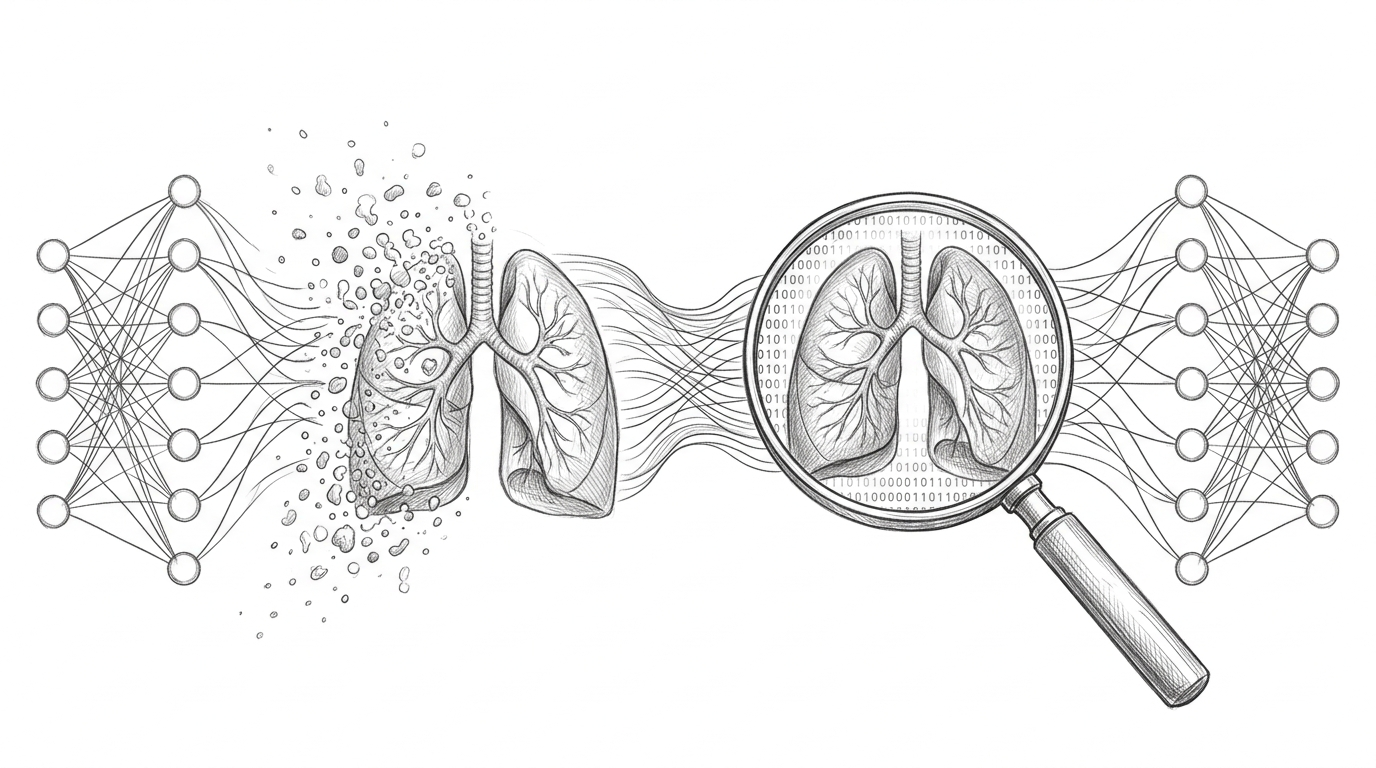
Early detection of lung cancer saves lives. When a pulmonary nodule, a small lump in the lung tissue, is caught early enough, treatment options are far better and survival rates improve significantly. The challenge is that spotting these nodules on a chest MRI scan requires a trained radiologist, a careful eye, and a lot of time. It is not something you can automate easily or rush.
We were exploring whether AI could help with exactly this as part of a proof of concept.
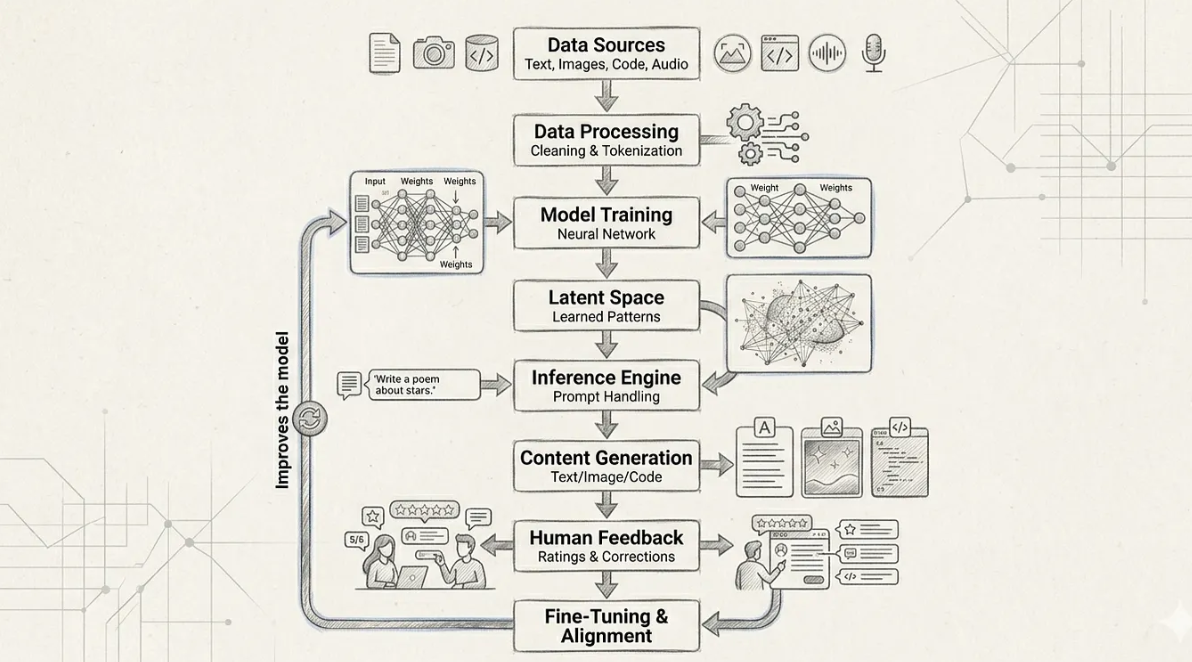
Gen AI Generative AI works by learning from large amounts of data, much like how humans learn from experience. Everything starts with data sources such as text, images, code, and audio. This data exposes the AI to how language is written, how visuals are structured, and how logic works in the real world. Importantly, the AI does not store this data like a library or database. Instead, it studies the data to understand patterns and relationships, which later help it generate new content.